-

Envíenos un correo electrónico
sale@lscmagnetics.com -

Número de contacto
+86 -13559234186
Envíenos un correo electrónico
sale@lscmagnetics.comNúmero de contacto
+86 -13559234186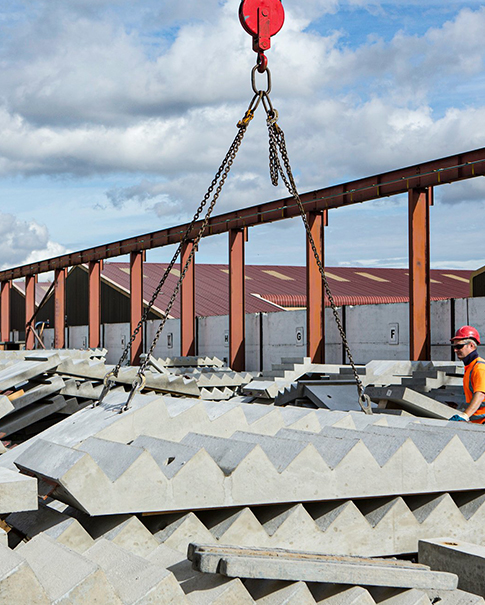

En la producción de componentes de hormigón prefabricado (HP), la elección del método de fijación del molde afecta directamente la eficiencia de la producción, la calidad del producto y los costos operativos. Los métodos de fijación mecánica tradicionales, como tornillos y tuercas, se han utilizado ampliamente durante mucho tiempo. Sin embargo, con el desarrollo de la construcción industrializada, Insertar imanes y Imanes de obturación Los sistemas basados en imanes permanentes de tierras raras de alta resistencia se están convirtiendo gradualmente en los favoritos de la industria. Este artículo comparará estos dos métodos de fijación desde múltiples perspectivas para ayudarle a elegir la solución de producción más adecuada.
I. ¿Qué son los sistemas de fijación con imanes integrados y los métodos de fijación tradicionales?
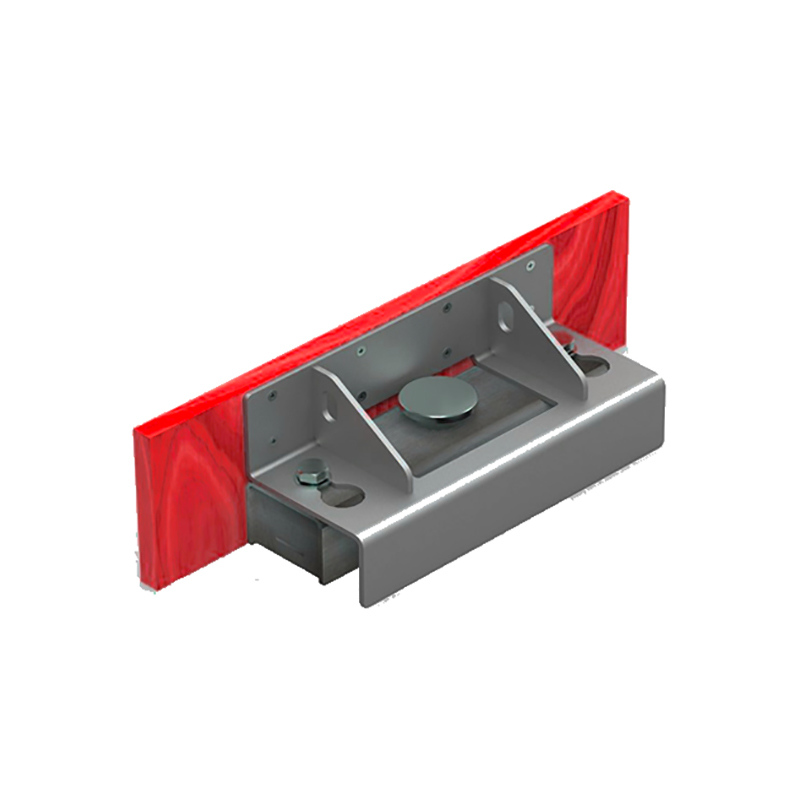
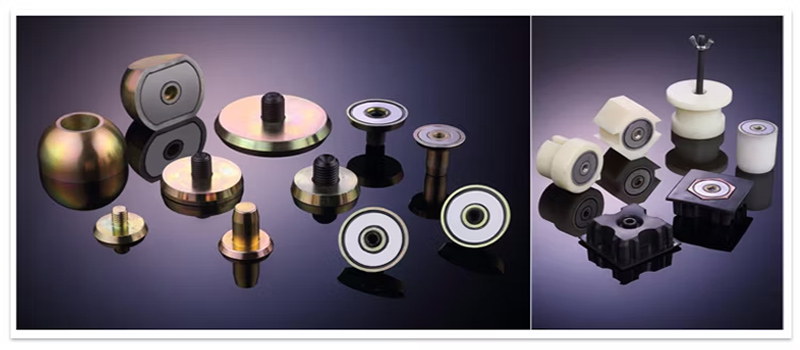
Un imán empotrado es un dispositivo de fijación magnética desarrollado específicamente para la producción de hormigón prefabricado. Se utiliza principalmente para fijar diversas piezas empotradas, como cajas de conexiones, conductos, manguitos de elevación y conectores.
Estructura central
- Material del imán permanente: Utiliza imanes de neodimio-hierro-boro (NdFeB) de alto rendimiento, que generan una fuerte atracción.
- Cuerpo protector de caucho/nylon: Una combinación única de caucho e imanes permite crear prácticamente cualquier forma.
- Sistema de conmutación: La fuerza magnética se controla mediante una palanca o un botón, sin necesidad de alimentación externa.
Principio de funcionamiento: Cuando el imán está en funcionamiento, su superficie de adsorción inferior se adhiere firmemente al molde de acero o a la plataforma de producción, generando una fuerte fuerza de atracción (generalmente de 20 kg a 2100 kg). Una vez desactivada la fuerza magnética, se puede retirar fácilmente sin dañar la plataforma.
Los métodos de fijación tradicionales consisten principalmente en asegurar el molde lateral a la plataforma de producción mediante pernos, soldadura o perforación e inserción de piezas embebidas. El atornillado requiere perforar agujeros en el molde o su base, mientras que la soldadura requiere trabajo en caliente; ambos métodos implican una considerable cantidad de mano de obra. En estructuras de hormigón armado prefabricado, las piezas embebidas (placas de acero o perfiles angulares, etc.) se anclan al componente de hormigón mediante barras de anclaje. El tamaño de la soldadura y la longitud de la barra de anclaje deben determinarse en función de la fuerza axial o cortante transmitida. Si bien las conexiones atornilladas y soldadas proporcionan una fijación fiable, sus procedimientos son relativamente complejos y requieren cierto nivel de conocimientos técnicos.
II. Estado actual de los métodos de fijación tradicionales Los métodos de fijación tradicionales incluyen principalmente:
| Métodos tradicionales | Modo de funcionamiento | Problemas principales |
| Fijación con tornillos y tuercas | Perforar agujeros en el molde o plataforma y apretarlos con tornillos. | Consume mucho tiempo, daña la plataforma y requiere reemplazo frecuente. |
| Reparación mediante soldadura | Soldar directamente las piezas incrustadas al molde. | Daña el molde, provoca deformación térmica y dificulta el desmontaje. |
| Dispositivos mecánicos | Utilizando diversos accesorios para fijar | Ajuste engorroso, poca adaptabilidad. |
III. Comparación de eficiencia: Las cajas magnéticas ofrecen ventajas significativas.
En las líneas de producción de hormigón prefabricado, el montaje y desmontaje de los moldes suelen ser las etapas que más tiempo consumen. Las cajas magnéticas ofrecen una ventaja significativa en este sentido.
Según datos de producción reales, una fábrica de componentes tradicional que utiliza métodos convencionales para producir componentes en una plataforma de molde de 6 m × 4 m tarda aproximadamente 1,5 horas en ensamblar una sola pieza, produciendo solo unos 6,6 juegos por día en 10 horas, con la ayuda de 5 trabajadores. En contraste, otra fábrica de componentes industrializada que utiliza cajas magnéticas fijas puede ensamblar una plataforma de molde de 9 m × 3,5 m en tan solo 12,5 minutos, produciendo 48 juegos por día con solo 3 trabajadores. Datos comparativos adicionales muestran que la línea de ensamblaje con cajas magnéticas fijas es 7,27 veces más rápida que el método tradicional.
Más concretamente, las cajas magnéticas se pueden fijar y soltar en segundos, reduciendo los ajustes de la estación de trabajo de una hora a menos de diez minutos. El sistema de plantillas magnéticas permite una fijación instantánea, eliminando la necesidad de tornillos, soldadura y pérdida de tiempo. En cambio, las instalaciones tradicionales con tornillos son difíciles, requieren mucho tiempo y mano de obra.
IV. Protección de equipos: Fijación no destructiva frente a daños permanentes.
Esta es la diferencia más fundamental entre los dos métodos en términos de protección de los equipos.
Las cajas magnéticas utilizan un potente núcleo magnético para adherir y fijar el molde a la plataforma, eliminando la necesidad de perforar agujeros en el molde o la plataforma. Esto no causa daños al molde ni a la plataforma, prolongando significativamente su vida útil. La adsorción magnética es un método de fijación no destructivo que protege la integridad de la superficie de la mesa de trabajo de acero, a la vez que permite un ajuste rápido.
Los métodos tradicionales requieren perforar el molde o la plataforma y fijarlos con pernos, lo que provoca daños permanentes. Con el tiempo, esto genera superficies irregulares en los componentes, acortando la vida útil del molde y la plataforma e incrementando los costos. Además, la perforación frecuente provoca gradualmente que la mesa de trabajo pierda su planitud, lo que afecta la precisión y la estabilidad de la producción posterior.
V. Escenarios de aplicación recomendados
Escenarios para la elección de imanes integrados:
- ✅ Producción estandarizada a gran escala: Componentes repetitivos como paneles de pared, losas de piso, vigas y columnas
- ✅ Líneas de producción automatizadas: Trabajo con brazos robóticos y equipos automatizados
- ✅ Ajustes de moldes de alta frecuencia: Líneas de producción que requieren cambios frecuentes en el tamaño del molde.
- ✅ Requisitos de alta precisión: Componentes con estrictos requisitos de precisión en el posicionamiento de las piezas integradas.
- ✅ Necesidades de protección de la plataforma: Fábricas que desean prolongar la vida útil de las plataformas de acero
Escenarios en los que los métodos de reparación tradicionales siguen siendo viables:
- ⚠️ Proyectos pequeños y temporales: bajo volumen de producción, uso poco frecuente de moldes.
- ⚠️ Componentes con formas especiales: componentes hechos a medida con formas no estándar o irregulares.
- ⚠️ Sistemas de moldes de madera: los moldes que no son de acero no se pueden fijar magnéticamente.
- ⚠️ Presupuesto extremadamente limitado: talleres pequeños con inversión inicial reducida.
VI. Tendencias del sector y conclusiones
Según el estado actual del desarrollo de la industria, los sistemas de fijación magnética integrados se están convirtiendo en la solución preferida para las modernas plantas de hormigón prefabricado. Sus principales ventajas incluyen:
1. Revolución en la eficiencia: Reducción del tiempo de reparación de moldes de minutos a segundos.
2. Control de calidad: Los procesos estandarizados reducen el error humano y mejoran la consistencia del producto.
3. Optimización de costes: Si bien la inversión inicial es mayor, los costes de mano de obra y mantenimiento a largo plazo se reducen significativamente.
4. Protección de la plataforma: Sus características de cero daños prolongan la vida útil de las costosas plataformas de acero.
5. Preparación para la automatización: Sentando las bases para la Industria 4.0 y la fabricación inteligente.
Sin embargo, es importante destacar que los sistemas magnéticos no son la solución definitiva. Para ciertas aplicaciones especializadas, los métodos tradicionales siguen siendo útiles. La mejor práctica consiste en combinar configuraciones según las necesidades específicas de producción: adoptar plenamente los sistemas de fijación magnética en líneas de producción estandarizadas de alto volumen, manteniendo la flexibilidad de los métodos tradicionales en proyectos especiales de lotes pequeños.
Whatsapp : +86 -13559234186
Correo electrónico : sale@lscmagnetics.com
Teléfono : +86 -13559234186